Have you ever waited alone at a bus stop and felt unsafe?
Community-led NSW campaign
Safer bus stops across NSW: evidence, community voices and practical action.
Protect the journey, not just the destination.
7,491 people signed in just three weeks. Explore the evidence and practical proposals for safer bus stops across NSW.
Our mission: an independent source of reliable evidence, community experiences and practical proposals for safer bus stops.
View the Petition RecordYou will be directed to the official NSW Parliament website.
Watch the Video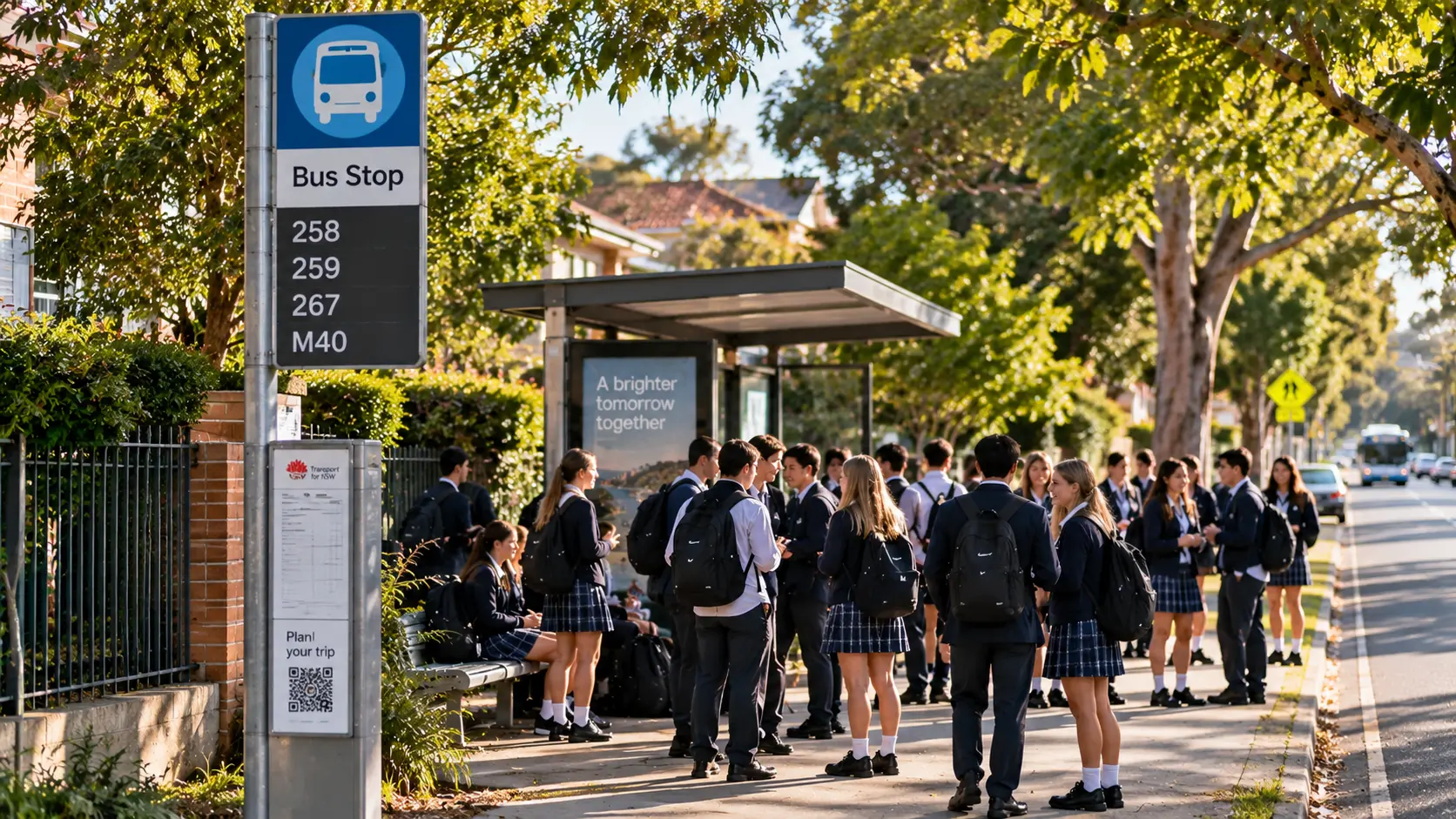
7,491signatures in three weeks
Targeted safety. Strong privacy. Safer journeys.
Watch the campaign video
Why this petition matters
The campaign story remains part of the record for safer public transport.
Official NSW Police-recorded figures · New research
Explore NSW Research and Data What 30 years of crime records reveal about bus premises
Explore interactive trends, 34 local government areas, victim demographics and evidence gaps, using a new BOCSAR extract.
Think about the journey
Safety concerns begin before the bus arrives
Do you wait anxiously for your child to message, ‘I’m home’?
Does your partner travel home after dark?
Do your parents or grandparents depend on buses to remain independent?
Public transport safety affects all of us.
Who and where
Everyday journeys, statewide responsibility
Children and families rely on a transport network that extends well beyond the school gate.
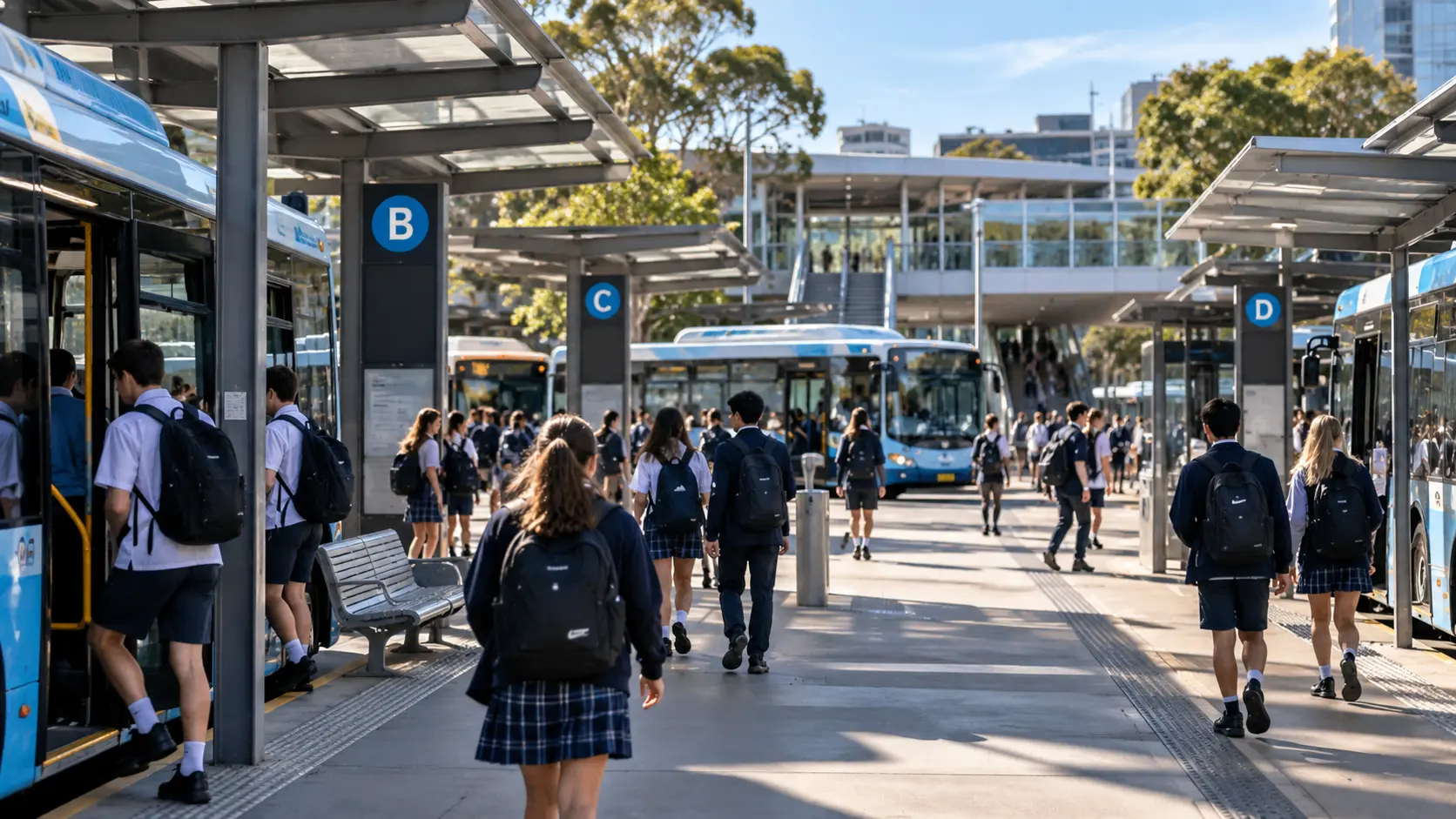
Who?
225,000
children
Every school day, around 225,000 NSW children travel to school and back home by bus.
For some, it is a single bus route. For others, it involves multiple routes, bus stops and transport interchanges.
Where?
59,000+
bus stops
Across more than 59,000 bus stops throughout NSW, children gather at busy stops and transport interchanges, often beyond the immediate supervision of schools or parents.
The 225,000 and 59,000+ figures are campaign scale figures based on information supplied directly to the campaign. A citable public-source note will be added when one is available.
What can happen?
A moment without support can become an emergency
“A high-use bus stop is not just a sign beside a road. For part of every school day, it becomes a gathering place for children.”

- Assault
- Bullying
- Sexual assault
- A medical emergency
- Extreme weather, fire or another emergency
Evidence for your community
A safer wait starts with understanding.
Explore location-specific bus-stop reports and the questions the available data cannot yet answer.
Find evidence for Sydney city, Greater Sydney, regional towns, low density areas and NSW as a whole.
Explore the evidence Public transport data → Regional NSW →Reliable evidence starts with the right location
Bus-stop-only totals and trends have not been established from the sources reviewed. We publish location-specific examples with their limits and seek consistent data for all five views.
Assess lighting, sightlines, accessible waiting space and help arrangements at each stop. Targeted CCTV is a possible part of a safety package; it is not a guarantee of prevention.
The central question
Should high-use school bus stops be assessed and given the right safety package—including lighting, help and response options, and targeted CCTV where justified?
We believe the answer should be yes.
Research from nine countries
What can international research teach us?
Explore studies and operational reports on CCTV, investigations, response and crime prevention. Each summary explains what was measured and what it can tell us about safer bus stops in NSW.
Explore International Evidence →What the petition is seeking
A targeted, evidence-based safety program
Assess first, then fund the mix of measures that fits each location.
Statewide assessment
Assess use, vulnerability, incident history, road safety and existing controls
Safer environments
Lighting, clear sightlines, accessible paths and safer waiting areas
Help and response
Clear reporting, emergency support and rapid response arrangements
People and workers
Staffing or patrols where justified, plus protections for drivers and workers
Useful, targeted CCTV
Risk-based cameras with usable images, maintenance and lawful evidence access
Accountability
Privacy, ownership, funding, uptime and published outcome evaluation
This campaign supports targeted, risk-based safety measures—not indiscriminate surveillance. Success should be measured through reported incidents and exposure, day/night safety perceptions, response times, camera uptime and footage usefulness, maintenance, privacy complaints and cost.
Permanent campaign record
Petition outcome and next steps
In just three weeks, 7,491 people signed “Make Bus Stops Safer With Targeted CCTV”. The petition closed on 5 October 2026.
Parliamentary status: The official petition page lists the status as “Tabled” and Anthony Roberts as the member. Status checked on 11 October 2026; the presentation date has not been independently confirmed.
NSW Parliament advised that petitions with 500 or more signatures receive a written response from the relevant Minister within 35 days. No ministerial response or response deadline is confirmed here.
The petition did not reach the 20,000-signature threshold for a petition debate in the Legislative Assembly. No debate is confirmed.
Community support recorded.
7,491 signatures in just three weeks.
The petition is closed. Our work continues as an independent source of evidence and reference for safer bus stops.
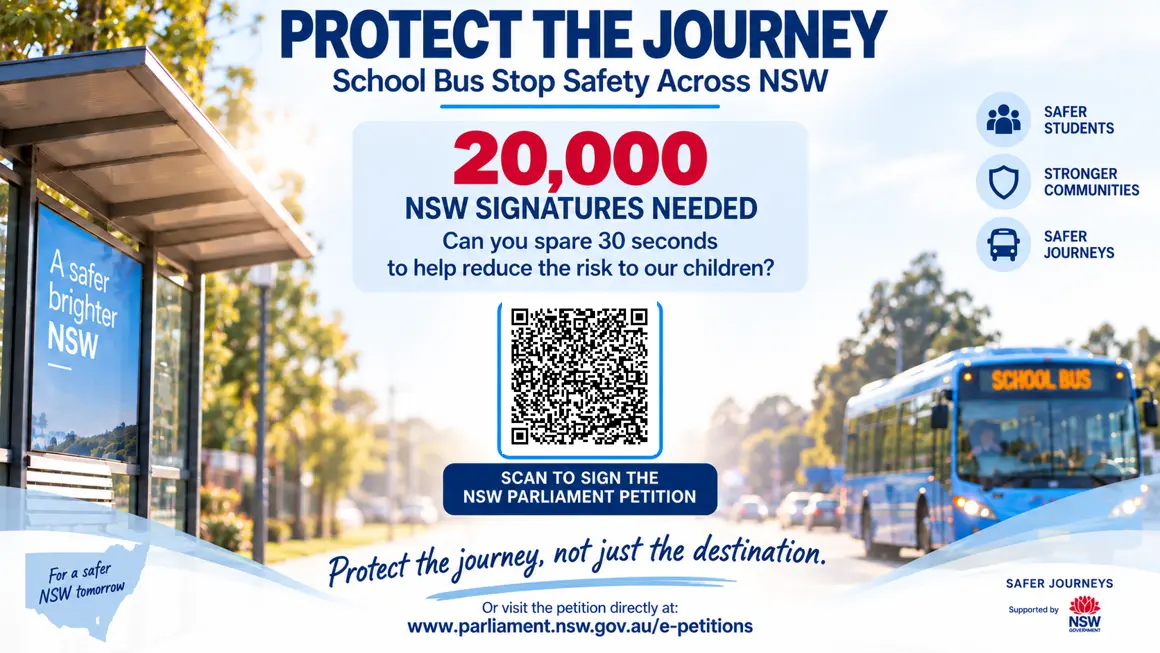
 Scan to view the official NSW Parliament recordView the Official Petition RecordThe petition is closed; its official record remains available.
Help the message travel
Keep the evidence and community voices accessible.
Share the campaign with family, friends, schools and community groups.
About and accountability
Our mission
SaferBusStops.org exists to help make bus stops across NSW safer by bringing together reliable evidence, community experiences and practical proposals for action. Building on a petition supported by 7,491 people in just three weeks, the website serves as an independent public resource for families, communities, researchers and decision-makers seeking to understand risks and improve safety.
Protect the Journey was started by NSW petitioner Jose Herrera Perea after his 15-year-old son was assaulted at a Hunters Hill bus stop and nearby footage did not provide the evidence the family had hoped for. The campaign advocates for a statewide assessment and targeted safety packages—not cameras at every stop.
This is a non-party-political community campaign. It does not represent the NSW Parliament, NSW Government, NSW Police or Transport for NSW. Any future organisational support or sponsorship will be disclosed here.
Community voices matter
Contact the campaign
If you would like to support the campaign, share a relevant community experience, or request further information, please get in touch.
Your enquiry is handled by authorised campaign administrators and the service providers that operate this form. See the privacy statement.
Do not include identifying information about children, alleged offenders or active police matters. In an emergency call 000; for non-urgent Police assistance call 131 444; Crime Stoppers: 1800 333 000.